
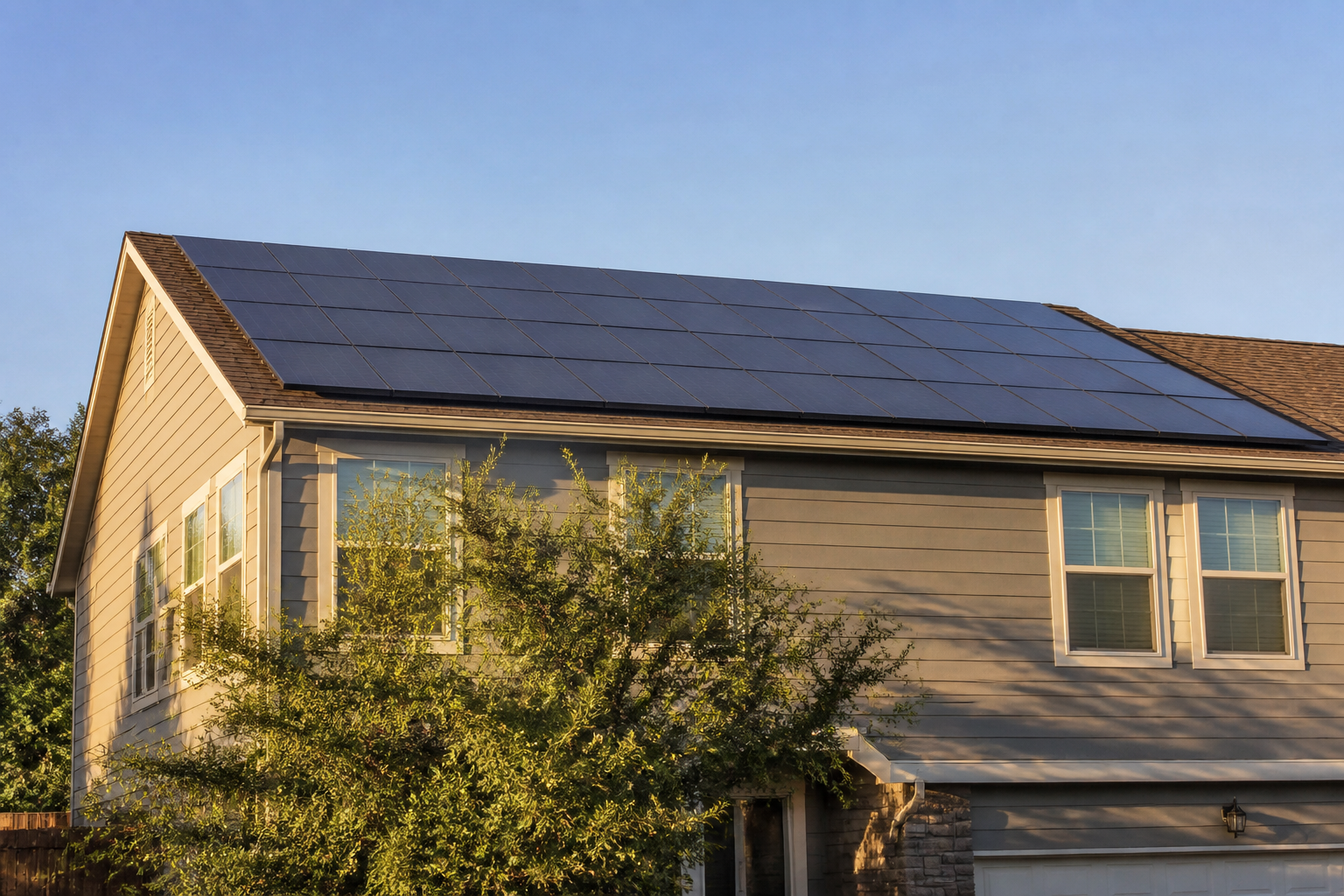
The solar panel installation process typically takes 1 to 3 days of on-site work, but the full timeline from signed contract to switched-on system runs 1 to 3 months. Most of that gap is paperwork: permits, utility approvals, and the final inspection.
Here's what actually happens. A site assessment checks your roof's age, pitch, and shading. Engineers design the system and size the inverter. Your installer pulls permits, then crews mount racking, attach panels, run DC wiring to an inverter, and tie into your main electrical panel. A local inspector signs off. The utility installs a bidirectional meter and grants Permission to Operate (PTO). Only then can you flip the switch.
Why this matters: roughly 60% of the timeline is administrative, not physical labor. Knowing the sequence helps you spot delays, ask better questions, and avoid installers who overpromise. A 6.5 kW residential system involves at least 7 distinct steps and 3 separate approvals before it produces a single kilowatt-hour.
What Is solar panel installation process?
The solar panel installation process is the sequence of steps that takes a rooftop (or ground plot) from bare surface to a grid-connected power system. Start to finish, it typically runs 1 to 3 months. The actual hands-on install? Usually 1 to 3 days. The rest is paperwork.
Here's the scope, broken into the six stages most residential jobs follow:
1. Site assessment, an installer measures roof pitch, shading, and structural load. Expect a 1, 2 hour visit. 2. System design and engineering, panel layout, inverter sizing, and load calculations. Takes 1, 2 weeks. 3. Permits and utility approval, building permits plus an interconnection agreement with your utility. This is the slow part: 2 to 6 weeks, sometimes longer. 4. Equipment procurement, panels, inverters, racking, wiring, and monitoring hardware arrive on site. 5. Physical installation, mounting rails, panels, inverter, and electrical tie-in. 1 to 3 days for a typical 6, 10 kW home system. 6. Inspection and Permission to Operate (PTO), a local inspector signs off, then the utility grants PTO. Add 1 to 4 weeks.
Context matters. A 7 kW residential system in the U.S. averages around $20,000, $22,000 before the 30% federal tax credit. Commercial and utility-scale projects follow the same basic stages but stretch across months or years, add environmental reviews, and often use ground-mount racking instead of roof attachments.
The install itself is the shortest chapter. Approvals dominate the calendar.
Key Benefits of solar panel installation process

A well-run solar panel installation process delivers measurable returns. Here's what the numbers actually show.
Electricity bill reduction: 50, 90%. Most residential systems offset the majority of grid consumption within the first billing cycle after commissioning. Homes in high-sun states (Arizona, Nevada, California) routinely hit the 90% mark. Cloudier regions still average 60, 70%.
Payback in 6, 10 years. With federal tax credits at 30% (through 2032) and average install costs of $2.75, $3.50 per watt before incentives, a typical 8 kW system pays for itself in under a decade. Panels are warrantied for 25 years, so that's 15+ years of near-free electricity.
Property value increase: ~4.1%. Zillow research pegs the median home value bump at 4.1% for solar-equipped homes. On a $400,000 house, that's roughly $16,400 added at resale.
Grid independence during outages. Systems paired with battery storage (Tesla Powerwall, Enphase IQ) keep essential circuits running for 12, 24 hours. Without batteries, grid-tied systems shut off during outages for safety, worth knowing before you sign.
Locked-in energy costs. Utility rates rose an average of 4.3% nationally in 2023. A paid-off solar array insulates you from that annual creep. Over 25 years, cumulative savings frequently exceed $30,000 for average households.
Fast installation timeline. Actual rooftop work takes 1, 3 days. The full solar panel installation process, site assessment, permitting, utility approval, install, inspection, PTO (permission to operate), typically runs 2, 4 months. Permitting is the slowest link, not the labor.
Carbon offset: ~3, 4 tons CO₂ per year. An 8 kW residential system offsets roughly the emissions of one gasoline car annually.
The catch: benefits depend on roof orientation, shading, local net metering rules, and utility rate structure. South-facing roofs in states with 1:1 net metering see the strongest numbers. Get a site-specific production estimate before committing.
How solar panel installation process Works

The solar panel installation process runs through seven distinct stages. Most residential jobs take 1, 3 days on-site, but the full timeline from contract to power-on averages 2, 6 months. Here's what actually happens.
1. Site assessment (1, 2 hours). An installer measures your roof, checks pitch (ideal is 15, 40°), inspects rafters, and pulls a shade report. They also review your last 12 months of electric bills to size the system. Average U.S. residential system: 7.15 kW, roughly 18 panels.
2. System design and engineering (1, 4 weeks). Engineers produce a stamped plan showing panel layout, string wiring, inverter placement, and load calculations. This document goes to your local building department.
3. Permitting (2, 8 weeks). The installer files with the city for a building and electrical permit, and separately with your utility for interconnection approval. Permitting is the slowest step in ~60% of projects.
4. Equipment order and delivery (1, 2 weeks). Panels, inverters (string or microinverters), racking, wiring, and monitoring hardware arrive on-site.
5. Installation day(s) (1, 3 days). Crews mount flashing and lag bolts into rafters, attach aluminum rails, clamp panels down, and run DC wiring through conduit. Microinverters bolt to each panel; string inverters mount near the main panel. An electrician ties the system into your service panel, often adding a production meter and rapid-shutdown device required by NEC 2017/2020.
6. Inspection (1, 3 weeks). A city inspector verifies grounding, conductor sizing, labeling, and structural attachment. Corrections, if any, delay the next step.
7. Permission to operate (2, 6 weeks). The utility swaps in a net meter and issues PTO. Only then can you legally flip the DC disconnect and start generating.
Total labor on the roof: usually 20, 40 person-hours. Everything else is paperwork.
Common Questions About solar panel installation process
How long does the solar panel installation process actually take?
The rooftop work is fast: 1, 3 days for most homes. The full timeline, from signed contract to switched-on system, runs 2, 6 months. Permitting and utility interconnection eat up 60, 80% of that wait. Site survey typically happens within 2 weeks of signing.
Do I need to be home during installation?
Yes for the site survey and the final inspection. During the actual install, only briefly, installers need attic access and roughly 15 minutes to shut off your main panel.
Will installers damage my roof?
Reputable crews flash and seal every mounting point. Leak rates on properly installed systems sit under 1%. Ask for a workmanship warranty of 10 years minimum; 25 years is now common.
What happens on inspection day?
A local building inspector checks structural mounts, conduit runs, grounding, and the electrical tie-in. Utility sign-off (Permission to Operate) comes separately and usually adds 2, 4 weeks after inspection passes.
Can I use my system immediately after panels go up?
No. Turning the system on before Permission to Operate can trigger fines and void your interconnection agreement.
How many workers show up?
Typical crew: 3, 5 people. One licensed electrician is required for the wiring and main service panel work.
What about my existing roof?
If your roof has under 10 years of life left, replace it first. Removing and reinstalling panels later costs $1,500, $3,000.
Does bad weather delay things?
Rain and high winds pause work. Add 1, 2 buffer days per install in wet months.
Conclusion
The solar panel installation process isn't complicated once you break it down: site assessment, design, permitting, installation day, inspection, and utility interconnection. Most residential jobs take 1-3 days on the roof, but the full timeline from signed contract to flipping the switch runs 6-12 weeks. Permitting and utility approval eat up more time than the actual work.
Three numbers worth remembering. Expect $3-$4 per watt installed before incentives. The federal tax credit still covers 30% through 2032. Payback periods typically land between 7 and 12 years, depending on your electric rates and sun exposure.
Get at least three quotes. Compare equipment tiers, warranties (25 years is standard for panels, 10-12 for inverters), and production estimates in kWh, not just the sticker price. Ask each installer for references from jobs completed 2+ years ago.
Next step: pull your last 12 months of electric bills and request quotes this week.
Learn more about Installation & performance.