
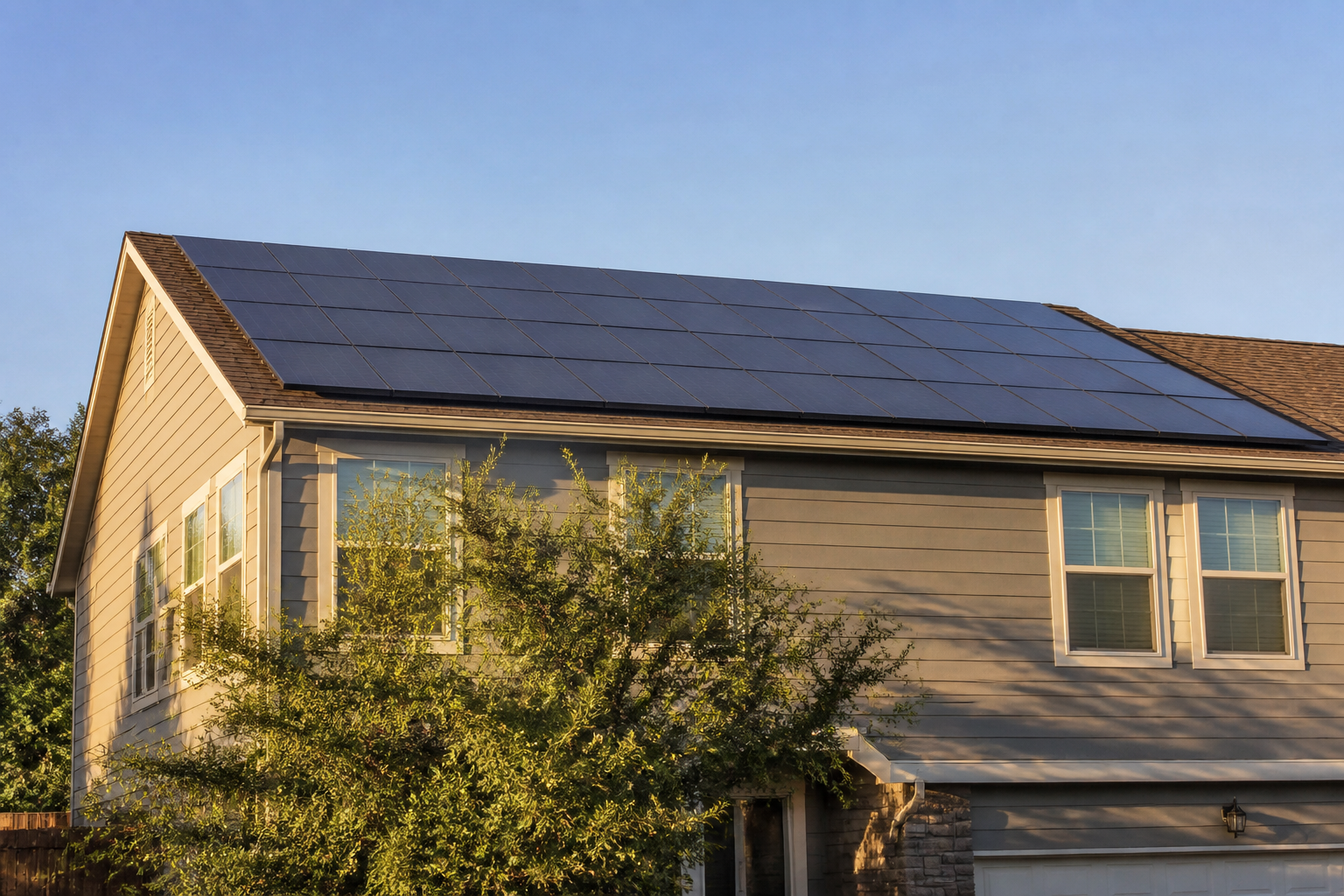
Solar panel cost 2026 is shaping up to be a moving target. After years of falling module prices, the picture is mixed. Hardware keeps getting cheaper, but tariffs, labor, permitting, and interest rates are pushing installed prices in the other direction. For a typical U.S. residential system, expect a gross cost of roughly $2.50 to $3.50 per watt installed, or about $17,500 to $24,500 for a 7 kW setup before incentives. The 30% federal tax credit is still on the books for systems placed in service in 2026, though its future beyond that is uncertain.
Why does this matter? The payback math has shifted. Electricity rates jumped nearly 6% nationally in 2024 and continue climbing, while net metering rules are tightening in states like California. That changes when, and whether, solar pencils out. The numbers below cut through the marketing and show what buyers are actually paying next year.
What Is solar panel cost 2026?
"Solar panel cost 2026" refers to the projected price of buying and installing a residential or commercial photovoltaic (PV) system in the 2026 calendar year. It's not a single number. The figure covers hardware (panels, inverters, racking, wiring), soft costs (permits, labor, sales, overhead), and any battery storage bolted on.
For context, the U.S. residential average sat near $3.00 per watt installed in 2024, according to NREL and LBNL tracking data. Commercial systems ran closer to $1.60, $1.80 per watt. Utility-scale projects came in under $1.20 per watt. Heading into 2026, three forces pull those numbers in different directions:
- Downward pressure: module oversupply from Chinese manufacturing (spot prices dropped below $0.11/W in 2024), improving cell efficiencies, and streamlined permitting via SolarAPP+.
- Upward pressure: U.S. tariffs on Southeast Asian imports (finalized 2024, 2025), domestic content requirements tied to the Inflation Reduction Act, higher labor and interconnection costs, and possible changes to the 30% federal tax credit under the current administration.
- Wild cards: battery attach rates, utility rate hikes, and state-level net metering rollbacks (California NEM 3.0 is the template others may follow).
Scope matters when you compare quotes. A $3.50/W residential number in 2026 typically means gross price before the tax credit. Net cost after a 30% credit lands closer to $2.45/W, assuming the credit survives intact.
Bottom line: 2026 pricing is a range, not a sticker, and where you land depends on system size, state, installer, and financing.
Key Benefits of solar panel cost 2026

Looking at solar panel cost 2026, the headline benefit is simple: you pay less per watt than at almost any point in the technology's history. Residential system prices in the US are tracking around $2.30, $2.80 per watt installed, down from roughly $3.00 in 2023. That drop changes the math on payback, financing, and resale value.
Here's what actually matters for a homeowner or small business shopping in 2026.
Shorter payback periods. A 7 kW system that cost $21,000 in 2022 now lands closer to $17,500 before incentives. Combined with the 30% federal Residential Clean Energy Credit (still active through 2032 under current law), effective out-of-pocket cost falls near $12,250. In states with retail-rate net metering, payback runs 6, 9 years instead of the 10, 12 typical a few years back.
Better panels for the same money. The price drop hasn't come with a quality trade-off. Standard residential modules in 2026 are 425, 460 W with efficiency ratings of 21, 22.8%. Five years ago, 350 W and 19% was normal. You fit more generation on the same roof.
Lower financing costs relative to output. Loan principals are smaller, so even with higher interest rates, monthly payments frequently come in below the utility bill they replace. That's the number to run: not sticker price, but net monthly cash flow.
Reduced exposure to rate hikes. US residential electricity rates rose about 22% between 2021 and 2025. Locking in generation cost hedges against continued increases, which most utility filings project at 3, 5% annually.
Higher home resale premium. Zillow and Berkeley Lab data consistently show owned (not leased) solar adds roughly 4% to home value. On a $450,000 home, that's $18,000, often more than the net system cost itself.
The value case in 2026 rests on cheaper hardware meeting a more expensive grid.
How solar panel cost 2026 Works

Solar panel cost in 2026 isn't a single sticker price. It's the output of a stack of inputs that move independently. Here's how the number actually gets built.
Step 1: Module manufacturing. Polysilicon, wafers, cells, and glass make up roughly 40-50% of a panel's factory-gate cost. Polysilicon prices dropped below $5/kg in late 2024 after a Chinese oversupply glut, and analysts expect them to stay flat or drift lower through 2026. That pushes module prices toward $0.10/watt at the factory door.
Step 2: Tariffs and trade policy. U.S. buyers don't pay factory prices. Section 201 tariffs, AD/CVD duties on Southeast Asian imports, and Uyghur Forced Labor Prevention Act enforcement add 15-50% depending on origin. The 2024 tariff hikes on Chinese cells to 50% are baked into 2026 landed costs.
Step 3: Balance of system (BOS). Inverters, racking, wiring, and combiner boxes usually run $0.30-0.45/watt for residential. Steel and copper price swings matter more here than panel prices do.
Step 4: Soft costs. Permitting, inspection, sales, financing, and labor make up 55-65% of a U.S. residential install. This is where the U.S. diverges hardest from Germany or Australia, where soft costs are half as much.
Step 5: Incentives applied last. The 30% federal Investment Tax Credit is scheduled to run through 2032 under current law, though post-election policy shifts could compress that timeline. State rebates, net metering rules, and SREC markets pull the net number down further.
Put it together: a residential install in 2026 likely lands at $2.50-3.50/gross watt before ITC, or roughly $1.75-2.45 net. Utility-scale sits closer to $1.00-1.20/watt. The panel itself is often less than 15% of what a homeowner pays, which is why module price drops don't shrink your bill one-to-one.
Common Questions About solar panel cost 2026
How much will a solar system actually cost in 2026? Expect $2.50 to $3.50 per watt installed before incentives. A typical 8 kW system lands between $20,000 and $28,000 gross. After the 30% federal tax credit, you're looking at roughly $14,000 to $19,600.
Is the 30% tax credit still available? Yes. The Residential Clean Energy Credit stays at 30% through 2032 under current law. You need tax liability to use it, and it's non-refundable but can roll forward.
Are prices dropping or rising? Panel hardware keeps getting cheaper. Modules are under $0.30/watt wholesale. But labor, permitting, and soft costs are climbing. Net result: installed prices have flattened, not fallen much year-over-year.
What about tariffs on imported panels? Tariffs on Southeast Asian imports took effect in 2024, 2025 and are pushing some installer prices up 5, 10%. Domestic-content systems cost more upfront but may qualify for bonus incentives.
How long is the payback period? Six to twelve years in most states, depending on electricity rates and sun exposure. High-rate states like California, Massachusetts, and Hawaii payback fastest. Cheap-power states like Louisiana take longest.
Should I add a battery? Batteries add $10,000 to $18,000. They rarely pay for themselves on energy savings alone. The case is backup power or time-of-use rate arbitrage.
Buy or lease? Cash purchase gives the best lifetime return. Loans work if the rate stays under 6%. Leases and PPAs cost more long-term and complicate home sales.
Conclusion
Solar panel cost in 2026 lands roughly where the trend lines pointed: gross system prices between $2.50 and $3.30 per watt installed, or about $15,000 to $22,000 for a typical 6kW residential setup before incentives. Module prices keep drifting down. Soft costs like permitting, labor, and sales do not.
Three things worth remembering. First, the federal residential tax credit still covers 30% through 2032, so post-incentive numbers look very different from sticker price. Second, payback windows now sit between 7 and 11 years in most sunny states, longer in the Northeast. Third, quotes vary by 40% or more for the same house, which means shopping matters more than picking a brand.
Next step: get three itemized quotes, ask each installer for the price per watt after incentives, and compare production estimates in kWh, not panel counts. That single habit filters out most of the noise.
Learn more about Costs & financing.