
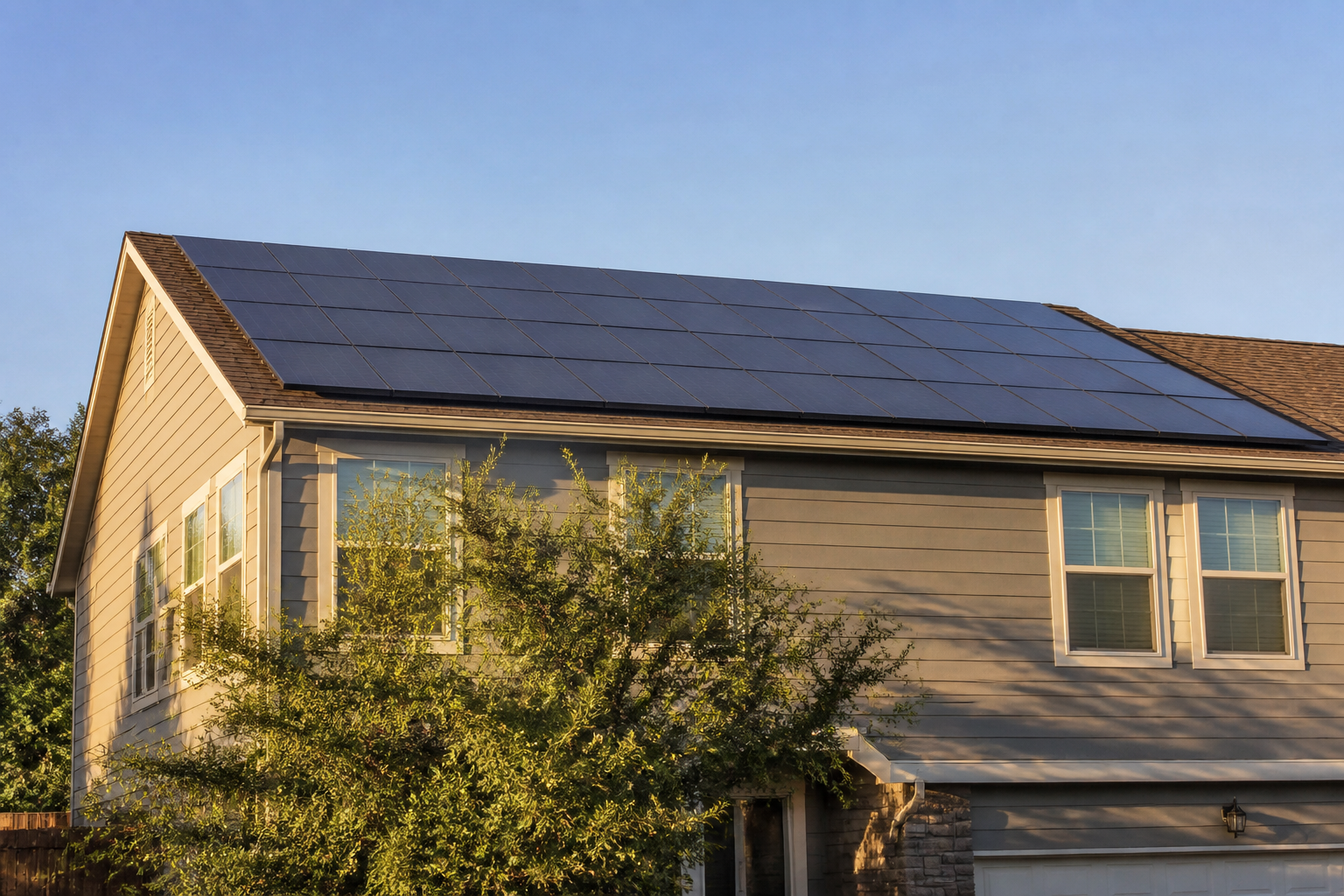
Picking the best solar panels 2026 comes down to three numbers: efficiency, warranty, and cost per watt. Top-tier residential panels now push 22.8% to 24.9% efficiency, with Maxeon, REC, and Canadian Solar leading independent lab tests. Warranties have stretched to 40 years on premium tiers, though most mainstream brands still cap at 25. Prices? Installed costs sit between $2.50 and $3.50 per watt in the US before the 30% federal tax credit, which is still active through 2032.
Why does the 2026 lineup matter more than past years? Two shifts. TOPCon and heterojunction (HJT) cells are replacing older PERC technology across most major brands, adding roughly 1, 2% real-world output. And tariff changes on Southeast Asian imports have reshuffled pricing, making some previously mid-range brands more competitive than the household names.
This guide compares the panels worth considering, the ones to skip, and the specs that actually affect your payback period.
What Is best solar panels 2026?
"Best solar panels 2026" refers to the top-performing residential and commercial photovoltaic modules available for purchase or installation during the 2026 calendar year. The label isn't a single official ranking. It's a shorthand used by reviewers, installers, and buyers to compare panels across four measurable criteria: efficiency, warranty terms, degradation rate, and price per watt.
Scope matters here. Most 2026 shortlists focus on monocrystalline silicon panels between 400W and 500W, since that's the dominant size for rooftop installs in the US, UK, and Australia. Utility-scale bifacial modules (often 600W+) sit in a separate category. Thin-film and emerging perovskite-tandem panels are tracked but rarely make consumer top-10 lists yet, because commercial availability remains limited.
The 2026 context is shaped by three shifts. First, average module efficiency has crossed 23% for premium residential lines, with Maxeon, REC, and Aiko pushing past 24%. Second, TOPCon and HJT cell architectures have largely replaced older PERC technology, which changes how panels degrade over 25-year warranties (typically 0.25% per year instead of 0.5%). Third, pricing has continued its long slide: wholesale module costs sit near $0.11 per watt globally, though installed residential prices remain far higher due to labor, inverters, and permitting.
So when someone asks about the best solar panels for 2026, the honest answer depends on what you're optimizing for: raw efficiency, dollars per watt, warranty length, or real-world performance in heat and low light. No single panel wins every category.
Key Benefits of best solar panels 2026

The 2026 crop of solar panels isn't a revolution, it's a steady grind of better numbers. Here's what actually changed and why it matters for your roof or wallet.
Higher efficiency, smaller footprint. Top-tier residential panels now hit 23, 24% conversion efficiency, with TOPCon and heterojunction (HJT) cells leading the pack. A few premium lines flirt with 25%. In practical terms: a 400W panel from 2020 is now a 460W panel in the same physical size. Fewer panels, less racking, lower install labor.
Lower cost per watt. Module prices dropped roughly 40% between 2023 and late 2025, driven by oversupply and cheaper polysilicon. Expect installed residential systems in the U.S. to land around $2.30, $2.80 per watt in 2026, down from $3.00+ a year earlier. Utility-scale contracts are signing under $1.10/W in several markets.
Better warranties, slower degradation. The best 2026 panels ship with 25- to 30-year performance warranties guaranteeing 87, 92% output at year 30. Annual degradation on premium HJT and back-contact panels sits near 0.25%, compared to 0.5, 0.7% for older PERC modules. Over 25 years, that gap is real money.
Improved low-light and heat performance. Bifacial designs pick up 5, 15% extra yield from reflected light, depending on ground surface. Lower temperature coefficients (around, 0.26%/°C on top HJT lines) mean less power loss on hot afternoons, the exact hours you're running the AC.
Cleaner integration with batteries and EVs. Most 2026 systems ship with inverters ready for battery pairing and bidirectional EV charging protocols. That matters as time-of-use rates spread and export payments shrink.
The short version: the best solar panels 2026 produce more watts per square foot, cost less per watt, and hold their output longer. The upgrade case is math, not marketing.
How best solar panels 2026 Works

The best solar panels 2026 all follow the same basic physics, but the newer models squeeze more electricity out of each photon. Here's what actually happens, step by step.
1. Sunlight hits the panel. A typical 2026 residential panel is rated between 430W and 460W, up from around 400W two years ago. The front glass is anti-reflective, so roughly 96% of usable light gets through instead of bouncing off.
2. Photons knock electrons loose. Inside each cell, silicon atoms absorb light energy. When a photon carries enough energy (about 1.1 electron volts for silicon), it kicks an electron free from its atom. This is the photovoltaic effect, discovered in 1839, commercialized in the 1950s.
3. The cell structure forces current in one direction. Most 2026 flagship panels use TOPCon or heterojunction (HJT) cell architecture instead of the older PERC design. Both add ultra-thin passivation layers that stop electrons from recombining before they leave the cell. Result: cell efficiency of 22.5, 23.5%, versus 20, 21% for PERC.
4. Electrons flow through wiring as DC. Thin silver or copper busbars collect the current. Newer panels use 16 busbars or zero-busbar designs, cutting resistance losses by about 2%.
5. An inverter converts DC to AC. String inverters or microinverters flip the direct current into 120V/240V alternating current your house actually uses. Conversion efficiency sits around 97, 98%.
6. Extra power exports or stores. Anything your home doesn't use either goes to a battery (if fitted) or back to the grid.
The step that separates 2026 panels from 2022 models is step 3. TOPCon now holds roughly 60% of new module shipments, and back-contact (BC) cells, where all wiring sits on the rear, are pushing commercial panel efficiency past 24%. That's the mechanism doing the heavy lifting.
Common Questions About best solar panels 2026
Which panels top the efficiency charts in 2026? Maxeon 7 leads residential at 24.1%, followed by Canadian Solar's TOPHiKu7 (23.5%) and REC Alpha Pure-RX (22.8%). Anything above 22% is genuinely high-efficiency. Below 20%, you're looking at budget tier.
How much do they actually cost? Installed system prices average $2.75, $3.20 per watt in the US before incentives. A 7kW system runs $19,250, $22,400. Premium panels add roughly $0.30/watt over standard mono-PERC.
Are 2026 panels worth waiting for versus buying 2025 stock? Only if you want back-contact or heterojunction tech. Efficiency gains year-over-year are 0.4, 0.6 percentage points. Payback difference is usually 3, 6 months across a 25-year lifespan.
What warranty should I expect? 25 years product, 30 years performance is now standard on tier-1 brands. Maxeon and REC push 40-year product warranties. Read the degradation curve: the best guarantee 87, 92% output at year 30.
TOPCon, HJT, or back-contact, which one? TOPCon dominates 2026 shipments (roughly 65% of new installs) because it's cheaper. HJT performs better in heat. Back-contact wins on aesthetics and shading tolerance but costs 15, 25% more.
Do bifacial panels make sense on a home roof? Rarely. Rear-side gains need reflective surfaces and airflow. Ground mounts see 5, 15% bonus yield; rooftops closer to 1, 3%. Skip the premium unless you have a light-colored flat roof.
How long until payback? US average is 7, 9 years at current electricity rates. High-rate states (California, Massachusetts) hit 5, 6 years.
Conclusion
The best solar panels 2026 shortlist comes down to three numbers: efficiency (aim for 22%+), degradation (under 0.4% per year), and warranty (25 years on product, not just performance). Maxeon, REC Alpha Pure-RX, and Qcells G11 lead on those metrics right now, with Canadian Solar and Trina offering the strongest value per watt if you're not chasing peak output.
Key takeaways:
- Panel choice matters less than installer quality. A top-tier panel poorly installed will underperform a mid-tier panel done right.
- Payback in most US states now sits between 6 and 9 years, assuming the 30% federal tax credit stays intact.
- Bigger isn't always better. Size your system to actual usage plus 15%, not roof capacity.
Next step: pull your last 12 months of electricity bills, then get three quotes from installers certified by the panel manufacturer you're considering. Compare cost per watt, not sticker price.
Learn more about Brands & comparisons.