
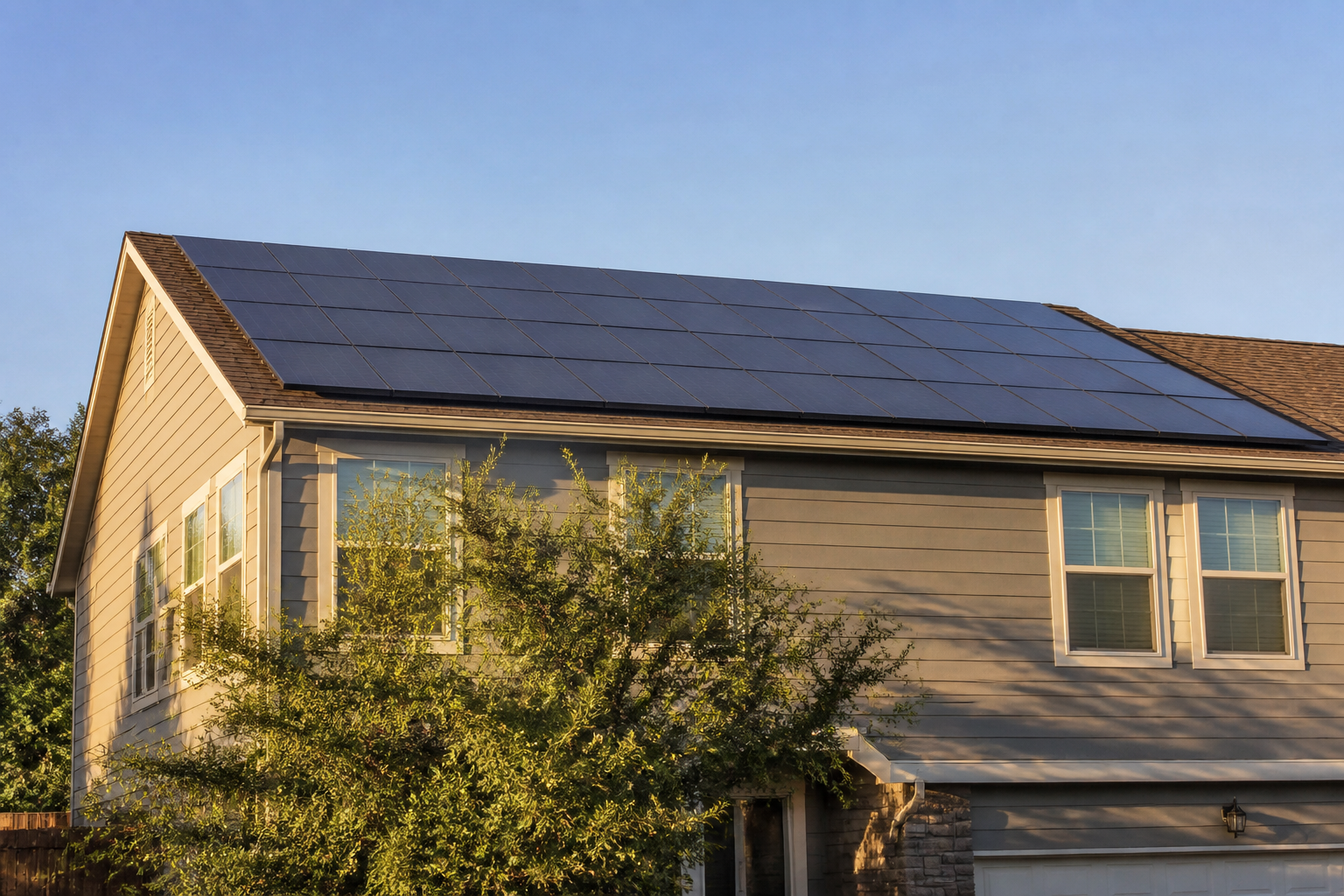
Solar panels are built to last 25 to 30 years, but output drops roughly 0.5% to 1% each year even under ideal conditions. Dirt, bird droppings, pollen, and shading from new tree growth can knock another 5% to 25% off production, according to field studies from the National Renewable Energy Laboratory. That is where solar panel maintenance earns its keep.
Maintenance is not complicated. It comes down to three things: keeping the glass reasonably clean, checking that inverters and wiring are healthy, and catching small faults before they become expensive ones. Most residential systems need a visual inspection twice a year and a professional electrical check every 4 to 6 years.
The financial case is straightforward. A 6 kW system producing 9,000 kWh a year is worth around $1,300 in avoided electricity at $0.15 per kWh. Losing 15% to neglect costs you about $200 annually, more than most maintenance visits.
What Is solar panel maintenance?
Solar panel maintenance is the ongoing work required to keep a photovoltaic (PV) system producing at or near its rated output. It covers three things: cleaning the panel surfaces, inspecting the hardware, and monitoring electrical performance.
The scope is broader than most homeowners assume. A residential rooftop system typically has 15, 30 panels, an inverter (or multiple microinverters), mounting rails, DC and AC wiring, isolators, and a monitoring app. Every one of those components can degrade, corrode, loosen, or fail. Panels themselves lose roughly 0.5% of output per year through natural degradation, but poor maintenance can push annual losses to 3, 5% or more.
Cleaning addresses soiling, dust, pollen, bird droppings, salt, ash, and lichen. Studies out of California and the Middle East put soiling losses between 2% and 7% annually in most climates, and up to 25% in dry, dusty regions with no rain. Inspection catches the failures cleaning cannot: cracked cells, hot spots, delaminated backsheets, chewed cables (rodents are a common culprit), corroded MC4 connectors, and loose roof brackets. Monitoring is the cheapest layer, comparing actual kWh output against expected generation flags problems before you see them on the roof.
Context matters. A system in coastal Queensland needs different attention than one in inland Arizona or cloudy Germany. Warranty terms, roof pitch, panel age, and inverter type all shift the maintenance schedule. Manufacturers generally recommend a visual check annually and a full electrical inspection every 4, 5 years, though real-world intervals vary with site conditions.
Key Benefits of solar panel maintenance

Dirty panels lose power. That's the short version. The longer version involves numbers worth knowing before you decide whether solar panel maintenance is worth the annual spend.
Output recovery. NREL field studies put soiling losses at roughly 5% per year on average, with some California sites hitting 20% during long dry stretches. A single cleaning typically restores 3, 8% of production. On a 10 kW system generating around 14,000 kWh a year, that's 420, 1,120 kWh back on the meter.
Early fault detection. Roughly 1 in 200 panels develops a defect each year, microcracks, delamination, diode failures, or corroded MC4 connectors. Thermal imaging during a service visit catches hot spots before they cascade. One shorted bypass diode can drag an entire string's output down by a third.
Warranty protection. Most tier-1 manufacturers require documented maintenance to honour their 25-year performance warranty. No records, no claim. That's a clause buried in the fine print that catches owners off guard when a module underperforms in year 12.
Inverter longevity. String inverters typically last 10, 15 years, but overheating from blocked vents or unnoticed fault codes shortens that meaningfully. Field data from SMA suggests regular firmware updates and ventilation checks extend service life by 2, 3 years on average.
Fire and safety risk reduction. DC arc faults cause an estimated 30% of PV-related fires. Loose connectors and rodent-damaged wiring are the usual culprits, both visible on a routine inspection, invisible from the ground.
Financial return. A typical residential service runs $150, $400. If it recovers even 5% of annual output on a system saving you $1,800 a year, payback is under 24 months. Commercial arrays see stronger economics because scale amplifies every percentage point.
Skip maintenance and the panels still work. They just work less, and you won't know by how much.
How solar panel maintenance Works

Solar panel maintenance is less about heroics and more about a repeating checklist. Here's the actual sequence.
1. Visual inspection (every 3, 6 months). Walk the array. Look for cracked glass, delaminated cells, scorched junction boxes, chewed wiring, and lifted mounting brackets. Rodents cause roughly 25, 30% of residential DC wiring faults, so check cable runs under the panels.
2. Performance check. Pull production data from the inverter or monitoring app. Compare kWh output against the same month last year, adjusted for irradiance. A sustained drop of 10% or more usually points to soiling, shading from new tree growth, or a failing string.
3. Cleaning. Dust, pollen, and bird droppings cut output by 5, 15% on average, more in dry or agricultural areas. Rinse panels early morning or evening with deionized or low-mineral water and a soft brush on a telescoping pole. Skip pressure washers (they void most warranties above 700 psi) and skip detergents that leave residue.
4. Electrical testing. Once a year, an installer checks DC string voltage, open-circuit voltage (Voc), and short-circuit current (Isc) against the panel datasheet. Deviations over 5% flag a bad module or connector. Infrared thermography catches hotspots, cells running 20°C hotter than neighbors are failing.
5. Inverter service. Inverters are the weak link. String inverters last 10, 15 years; microinverters 20, 25. Clear vents, check error logs, and confirm firmware is current.
6. Mounting and seals. Torque-check bolts to spec (usually 15, 20 Nm for module clamps) and inspect roof flashings for cracked sealant.
7. Documentation. Log every reading. Trends matter more than single numbers, a panel losing 0.8% per year is normal degradation; 3% per year is a warranty claim.
That's the whole loop: inspect, measure, clean, test, log, repeat.
Common Questions About solar panel maintenance
How often do panels actually need cleaning? For most rooftop systems, twice a year is enough. If you live within 300 metres of a busy road, farm, or coastline, bump it to quarterly. Studies from the NREL show soiling drops output by 5, 7% on average, but neglected panels in dusty regions have lost up to 25%.
Can I just hose them down myself? Yes, if the panels are ground-mounted or you can reach them safely from the edge of the roof. Use plain water, a soft brush on a telescopic pole, and clean early morning or evening. Never spray cold water on hot glass, thermal shock cracks cells.
What does a professional clean cost? Expect £4, £8 per panel in the UK, or $10, $20 in the US. A 12-panel system runs roughly £60, £100 per visit.
Do I need to service the inverter? String inverters typically last 10, 15 years and rarely need hands-on maintenance, but check the display or app monthly for fault codes. Microinverters last 20, 25 years and self-report per panel.
How do I know a panel is underperforming? Compare daily kWh output to the same month last year. A drop above 10%, once weather is factored in, points to soiling, shading, or a failed bypass diode.
Does bird mess really matter? Yes. A single dropping can shade a cell string and cut a panel's output by 30% until removed.
Will maintenance void my warranty? Only if you use abrasive cleaners or walk on the glass. Check your manufacturer's guidelines before the first clean.
Conclusion
Solar panel maintenance isn't complicated, but skipping it costs you. Dirty panels lose 5, 25% of output depending on your climate, and small issues like a loose MC4 connector or a shaded bypass diode can quietly drag a whole string down for years.
Here's what the numbers point to. Rinse panels twice a year in most regions, quarterly if you're near farms, highways, or coastlines. Check your inverter data monthly, a 10% drop from last year's same-month output is your early warning. Book a professional inspection every 3, 5 years to catch wiring, mounting, and hotspot issues a visual check will miss.
DIY cleaning runs about $0, 50. A pro clean is $150, 300. A full inspection sits around $150, 400. Compare that to a 15% production loss on a 6kW system: roughly $180, 250 a year, forever.
Next step: pull up your monitoring app and check this month's kWh against last year. Start there.
Learn more about Installation & performance.